
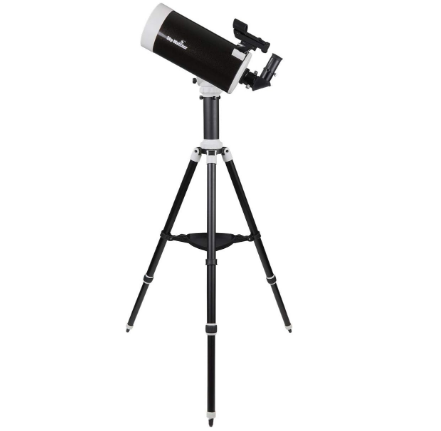
The best telescopes for planet viewing allow astronomers to explore the wonders of our solar system with impressive clarity, revealing details such as Jupiter’s cloud bands, Saturn’s rings, Mars’ surface features, and the rugged landscape of the Moon.
Today’s top telescopes combine powerful optics, stable mounts, advanced tracking systems, and user-friendly technology to make planetary observation easier and more enjoyable than ever.
Whether you’re a beginner looking for your first telescope or an experienced observer seeking enhanced performance, there are excellent options available to suit a variety of needs and budgets.
In this guide, we’ll cover the key features that make a great planetary telescope, review the top picks available today, provide a helpful buying guide, and answer some frequently asked questions to help you choose the best telescope for planet viewing.
Best Telescope for Planet Viewing
1}The Celestron StarSense Explorer 150AZ App-Enabled Telescope
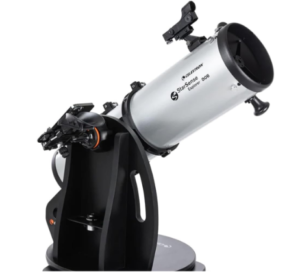
The Celestron StarSense Explorer 150AZ App-Enabled Telescopeis an excellent choice for planet viewing, especially for beginners who want an easy and enjoyable way to explore the night sky. Combining a powerful 150mm Newtonian reflector with innovative smartphone-guided navigation, this telescope removes much of the frustration often associated with locating celestial objects. Its impressive light-gathering ability and user-friendly design make it a strong contender among the best telescopes for observing planets such as Jupiter and Saturn.
One of the most appealing aspects of this telescope is its StarSense Explorer smartphone integration. After docking a compatible smartphone and launching the StarSense Explorer app, users receive step-by-step guidance to celestial targets. The app uses patented sky recognition technology that analyzes visible star patterns to determine the telescope’s exact position. This approach is far more intuitive than traditional star-hopping methods and allows newcomers to find planets and other objects with confidence.
The app also enhances the observing experience by generating a customized list of recommended targets based on the user’s location and viewing time. Whether you’re searching for bright planets, star clusters, nebulae, or distant galaxies, the software helps prioritize the most rewarding objects available in the sky. This feature is particularly useful for beginners who may not know what to observe during a given night.
For planetary observation, the telescope’s 150mm (6-inch) Newtonian reflector delivers impressive performance. The generous aperture gathers ample light while the high-reflectivity coatings help produce bright and detailed images. Jupiter’s cloud bands, Saturn’s rings, and lunar craters appear sharp and well-defined under favorable viewing conditions. The telescope also performs admirably on deep-sky objects, making it a versatile option for those who wish to explore beyond the planets.
The manual altazimuth tabletop Dobsonian-style mount contributes to the telescope’s ease of use. Setup is straightforward, and movement remains smooth while tracking objects across the sky. The StarSense app guides users with on-screen arrows, and when the target indicator turns green, the object is positioned within the eyepiece’s field of view. This streamlined process significantly reduces the learning curve for first-time observers.
Celestron further strengthens the package with dependable customer support and warranty coverage. As one of the most recognized names in amateur astronomy, the company backs the telescope with a two-year warranty and access to knowledgeable support representatives, providing added confidence for buyers making their first telescope purchase.
Pros
- Easy smartphone-guided navigation system
- Patented StarSense technology accurately locates celestial objects
- Large 150mm aperture provides bright planetary views
- Sharp views of Jupiter, Saturn, and the Moon
- Generates personalized observing recommendations
- Simple setup suitable for beginners
- Smooth manual tracking with Dobsonian-style mount
- Effective for both planetary and deep-sky observation
- Strong warranty and customer support
Cons
- Requires a compatible smartphone for full functionality
For anyone seeking a beginner-friendly telescope that excels at planetary viewing while offering modern navigation assistance, the Celestron StarSense Explorer 150AZ App-Enabled Telescope is an outstanding option. Its combination of quality optics, innovative technology, and ease of use makes it one of the best telescopes for exploring the planets and beyond.
2}Celestron StarSense Explorer 8-inch App-Enabled Telescope
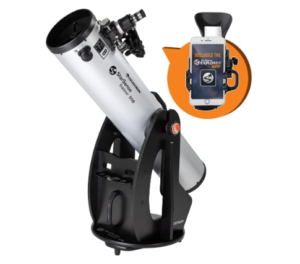
The Celestron StarSense Explorer 8-inch App-Enabled Telescope is one of the best telescopes for planet viewing, combining a large 203mm reflector with innovative smartphone-assisted navigation. Designed for beginners and experienced observers alike, this telescope makes finding celestial objects remarkably simple while delivering the light-gathering power needed for detailed planetary observations. Its large aperture and user-friendly design make it an excellent choice for anyone looking to explore the Moon, planets, and deep-sky objects.
One of the telescope’s most impressive features is the StarSense Explorer app. After placing a compatible smartphone in the docking station, the app uses patented sky recognition technology to determine the telescope’s position by analyzing the stars overhead. Instead of relying on complicated star charts or manual searching, users simply follow the on-screen arrows to their desired target. This makes locating planets, star clusters, and nebulae much easier, even for those with no prior astronomy experience.
The app also creates a personalized list of recommended celestial targets based on the observer’s location and time. This feature helps users make the most of every observing session by highlighting the best objects currently visible in the sky. Whether observing from a city backyard or a dark rural location, the app provides a convenient guide to the night’s most rewarding sights.
For planetary observation, the 8-inch Newtonian reflector delivers exceptional performance. The large 203mm aperture collects a significant amount of light, allowing observers to see impressive detail on the Moon and planets. Jupiter’s cloud bands, Saturn’s ring system, and surface features on Mars become much easier to observe under favorable conditions. The telescope’s high-reflectivity XLT coatings enhance image brightness and contrast, producing sharp and vivid views that satisfy both beginners and advanced users.
The telescope is mounted on an ultra-stable manual altazimuth Dobsonian base that offers smooth movement and reliable tracking. Following objects across the sky feels natural and precise, while the StarSense app provides continuous guidance to keep observations simple. Once the bullseye on the app turns green, the selected object is ready to view through the eyepiece. This combination of stability and ease of use helps create a more enjoyable observing experience.
Celestron further adds value with a two-year warranty and access to unlimited technical support from its team of astronomy experts. This support can be particularly helpful for newcomers who may have questions about setup, maintenance, or observing techniques.
Pros
- Large 203mm aperture provides excellent planetary detail
- Sharp and bright views enhanced by XLT coatings
- StarSense technology simplifies finding celestial objects
- Smartphone-guided navigation is easy for beginners
- Personalized observing recommendations through the app
- Stable Dobsonian base offers smooth tracking
- Effective for both planetary and deep-sky viewing
- Quick and straightforward setup process
- Strong warranty coverage and customer support
Cons
- Requires a compatible smartphone for navigation features
The Celestron StarSense Explorer 8-inch App-Enabled Telescope is an outstanding option for anyone seeking a powerful and easy-to-use telescope for planet viewing. Its combination of large-aperture optics, smartphone-assisted navigation, and stable Dobsonian design provides an excellent observing experience while making astronomy more accessible to beginners and enthusiasts alike.
3}Sky-Watcher AZ-GTi with SkyMax 127
The Sky-Watcher AZ-GTi with SkyMax 127 is an excellent choice for astronomers seeking a compact yet powerful telescope for planet viewing. Combining a highly portable computerized mount with a high-contrast Maksutov-Cassegrain optical tube, this telescope package offers impressive performance for observing the Moon, Jupiter, Saturn, and other bright celestial objects. Its travel-friendly design and modern wireless controls make it especially appealing to beginners and experienced observers who value convenience without sacrificing image quality.
One of the major strengths of this telescope is the included 127mm SkyMax Maksutov-Cassegrain optical tube. This design is known for delivering sharp, high-contrast views while maintaining a compact form factor. The long focal length naturally provides high magnification, making it particularly well suited for detailed planetary observation. Lunar craters appear crisp and well defined, while Jupiter’s cloud bands and Saturn’s rings can be observed with excellent clarity under favorable viewing conditions.
The AZ-GTi mount adds a high level of functionality to the package. Despite weighing only 8.6 pounds, it features fully computerized Go-To capabilities that automatically locate and track celestial objects. Once aligned, the mount keeps planets and other targets centered in the eyepiece, allowing observers to spend more time enjoying the view and less time manually tracking objects across the sky.
Wireless connectivity is another highlight of the system. The AZ-GTi generates its own WiFi network, enabling users to control the telescope directly from a smartphone or tablet. Through the companion app, astronomers can browse celestial objects, command the telescope to move to selected targets, and manage tracking functions without needing a traditional hand controller. This modern approach simplifies operation and makes the telescope more accessible for newcomers.
The mount’s 11-pound payload capacity provides excellent versatility. In addition to supporting the included optical tube, it can accommodate many other telescope tubes and DSLR cameras. This flexibility allows users to expand their astronomy setup over time without immediately needing a new mount.
For those interested in astrophotography, the AZ-GTi includes photography-focused features such as automated time-lapse and panorama creation. The built-in SNAP port supports camera control, helping users capture sequences automatically. These capabilities make the system more than just a visual observing platform and add value for hobbyists interested in imaging.
Another useful feature is Sky-Watcher’s Freedom Find dual-encoder technology. This system allows the telescope to be manually repositioned without losing alignment. Observers can freely move the telescope to a new target and still maintain accurate tracking and Go-To functionality, creating a more flexible and enjoyable observing experience.
Pros
- Excellent optical performance for planetary and lunar viewing
- Compact Maksutov design is easy to transport
- Fully computerized Go-To tracking system
- Lightweight mount suitable for travel
- WiFi connectivity allows smartphone and tablet control
- High-contrast views of planets and the Moon
- Freedom Find technology permits manual movement without losing alignment
- Supports additional telescope tubes and DSLR cameras
- Time-lapse and panorama features enhance imaging capabilities
- Simple operation for beginners and experienced users
Cons
- Smaller aperture than some larger Dobsonian telescopes
The Sky-Watcher AZ-GTi with SkyMax 127 successfully combines portability, advanced technology, and strong optical performance into a single package. For observers looking for one of the best telescopes for planet viewing that is easy to transport and operate, this system offers an excellent balance of convenience, tracking accuracy, and sharp planetary detail.
4}Celestron NexStar 8SE Computerized Telescope
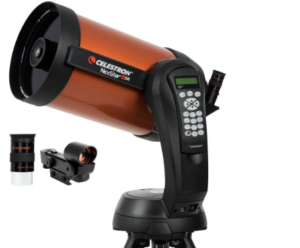
The Celestron NexStar 8SE Computerized Telescope is widely regarded as one of the best telescopes for planet viewing, offering an outstanding blend of optical performance, portability, and advanced computerized technology. Designed for astronomy enthusiasts who want to move beyond basic manual telescopes, the NexStar 8SE provides impressive views of the planets while making it easy to locate and track celestial objects. Its combination of powerful optics and user-friendly automation has made it one of the most popular telescopes in its class.
The telescope features an 8-inch Schmidt-Cassegrain optical system, a design known for delivering excellent image quality in a compact package. The large aperture gathers substantial amounts of light, allowing observers to enjoy bright and detailed views of celestial objects. For planetary observation, the telescope excels at revealing fine lunar features, Jupiter’s cloud belts, Saturn’s ring system, and subtle surface details on Mars during favorable viewing conditions. The optical design also performs exceptionally well on deep-sky targets, providing versatility for a wide range of astronomical interests.
A major advantage of the NexStar 8SE is its fully computerized GoTo mount. Using the included NexStar+ hand controller, observers gain access to a database containing more than 40,000 celestial objects. After selecting a target, the mount automatically slews to the object and keeps it centered as the Earth rotates. This automation eliminates much of the frustration associated with manually locating and tracking objects, making observing sessions more productive and enjoyable.
The telescope’s SkyAlign technology further simplifies the setup process. Rather than requiring users to identify specific stars, the system only asks that three bright celestial objects be centered in the eyepiece. These can be stars or planets, even if the observer does not know their names. The telescope then calculates its position and completes the alignment process within minutes. This convenient feature makes the NexStar 8SE accessible to beginners while still satisfying experienced astronomers.
Another benefit is the telescope’s expandability. The NexStar 8SE is compatible with a wide range of Celestron accessories that can enhance automation, improve location accuracy, and add wireless control capabilities. As users develop their astronomy skills, the telescope can grow with them through various upgrades and enhancements.
Portability is another reason for the telescope’s popularity. Despite its substantial 8-inch aperture, the Schmidt-Cassegrain design keeps the optical tube relatively compact and easy to transport. This allows observers to travel to darker locations for improved planetary and deep-sky viewing without dealing with the bulk associated with larger telescope designs.
Celestron also provides additional peace of mind through a two-year warranty and access to unlimited technical support. This commitment to customer service helps ensure a positive ownership experience for both newcomers and seasoned astronomers.
Pros
- Large 8-inch aperture delivers excellent planetary detail
- Schmidt-Cassegrain design provides powerful optics in a compact size
- Computerized GoTo system automatically locates celestial objects
- Database includes more than 40,000 targets
- SkyAlign technology makes setup quick and simple
- Automatic tracking keeps planets centered in the eyepiece
- Portable design compared to many large-aperture telescopes
- Compatible with numerous upgrade accessories
- Strong performance on both planets and deep-sky objects
- Backed by a two-year warranty and technical support
Cons
- Higher price than many beginner telescopes
The Celestron NexStar 8SE Computerized Telescope remains one of the finest choices for planet viewing thanks to its powerful 8-inch optics, reliable GoTo technology, and beginner-friendly operation. Whether observing Saturn’s rings, Jupiter’s atmospheric bands, or the countless objects contained within its extensive database, this telescope delivers an engaging and rewarding astronomy experience that can satisfy users for many years.
5}Odyssey PRO – UNISTELLAR Smart Telescope (with Eyepiece)
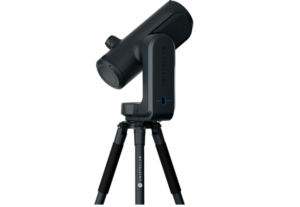
The Odyssey PRO by UNISTELLAR represents a new generation of telescopes that combines advanced astronomy technology with remarkable ease of use. Designed for both visual observation and digital imaging, this smart telescope offers a highly automated experience that removes many of the traditional challenges associated with astronomy. For users seeking a telescope that delivers convenient planetary observation alongside modern imaging capabilities, the Odyssey PRO is one of the most innovative options available.
Getting started is exceptionally simple. The telescope can be ready for observing in less than two minutes. After powering on the system and connecting through the companion app, the telescope automatically aligns itself and prepares for observation. There is no need for polar alignment, manual calibration, or complex setup procedures. This streamlined process allows users to focus on exploring the night sky rather than spending valuable observing time configuring equipment.
One of the most unique aspects of the Odyssey PRO is its exclusive eyepiece technology. Unlike many smart telescopes that rely entirely on digital displays, this model allows users to enjoy a traditional visual observing experience through an eyepiece while also benefiting from advanced digital enhancements. Observers can choose between viewing through the eyepiece or accessing images directly from a smartphone or tablet, creating a flexible and immersive astronomy experience.
For planet viewing, the telescope’s 85mm optical system delivers clear and detailed images of the Moon and bright planets. Combined with the motorized Alt-Azimuth mount and ultra-precise GoTo functionality, the telescope automatically locates and tracks celestial targets with impressive accuracy. This tracking capability helps keep planets centered in the field of view, making extended observation sessions much more enjoyable.
The all-in-one design further enhances convenience. The telescope integrates its optics, digital camera, electronics, motorized mount, onboard computer, WiFi connectivity, and storage into a single compact system. The included tripod provides a stable platform, while the lightweight design makes transportation easy. With up to five hours of battery life and 64GB of onboard storage, users can observe and capture images throughout an evening without requiring additional accessories.
Advanced users will appreciate the telescope’s support for RAW and FITS image export. These formats allow for detailed post-processing and image enhancement. The extensive object database includes more than 5,000 celestial targets and draws from a catalog containing over 37 million stars, providing plenty of opportunities for exploration beyond the planets.
Another appealing feature is participation in citizen science projects. Through collaborations with organizations such as NASA and SETI, users can contribute observations to real scientific research programs, including asteroid occultation studies and exoplanet transit monitoring. This capability transforms the telescope from a recreational tool into a platform for meaningful scientific contribution.
Pros
- Extremely fast setup with automatic alignment
- No polar alignment or calibration required
- Unique eyepiece technology combines visual and digital observing
- Ultra-precise GoTo system automatically locates targets
- Motorized tracking keeps planets centered during observation
- Compact and lightweight design for portability
- Built-in WiFi connectivity for smartphone and tablet control
- Integrated camera and storage eliminate the need for additional equipment
- Supports RAW and FITS image export for advanced imaging
- Access to citizen science programs and research projects
- Up to five hours of battery life for extended sessions
Cons
- Smaller 85mm aperture gathers less light than larger planetary telescopes
The Odyssey PRO – UNISTELLAR Smart Telescope offers a remarkably modern approach to astronomy. Its automated setup, intelligent tracking, integrated imaging system, and exclusive eyepiece technology make it one of the most user-friendly telescopes available today. For observers who value convenience, smart features, and the ability to combine planetary viewing with advanced digital astronomy, the Odyssey PRO is an excellent choice and one of the best telescopes for planet viewing in its category.
Advantage of the Best Telescope for Planet Viewing
Excellent Planetary Detail
One of the biggest advantages of these telescopes is their ability to reveal fine details on planets and the Moon. High-quality optics combined with sufficient aperture allow observers to see features such as Jupiter’s cloud bands, Saturn’s rings, Mars’ surface markings during favorable conditions, and intricate lunar craters. This level of detail creates a more engaging and rewarding viewing experience for anyone interested in planetary astronomy.
Easy Object Location
Many modern telescopes now include advanced navigation technologies that make finding celestial objects much easier. Smartphone-assisted systems, computerized GoTo mounts, and automated sky recognition features help users quickly locate planets, stars, and deep-sky objects. This reduces the frustration often associated with manual searching and allows observers to spend more time viewing and less time navigating.
Automatic Tracking Capabilities
Tracking technology is a major advantage when observing planets at high magnifications. Automated mounts follow celestial objects as they move across the sky due to Earth’s rotation, keeping them centered in the eyepiece. This provides a more comfortable observing experience and allows users to focus on studying details rather than constantly adjusting the telescope’s position.
User-Friendly Setup
Many of these telescopes are designed to simplify the setup process. Features such as automatic alignment, guided setup procedures, and intuitive control systems help beginners start observing quickly. Even users with little or no astronomy experience can become comfortable operating the equipment within a short period of time.
Versatility for Multiple Types of Observing
While these telescopes excel at planetary viewing, they are also capable of observing a wide variety of celestial targets. Users can explore star clusters, nebulae, galaxies, double stars, and the Moon with the same instrument. This versatility provides excellent value and keeps the hobby interesting as observers expand their astronomical interests.
Compact and Portable Designs
Several of these telescopes offer impressive optical performance while maintaining a relatively compact size. Portable designs make it easier to transport equipment to darker observing locations where skies are clearer and less affected by light pollution. This flexibility allows users to enjoy better viewing conditions without dealing with excessively bulky gear.
Advanced Digital Integration
Modern astronomy equipment increasingly incorporates smartphone apps, wireless connectivity, and computerized control systems. These technologies provide access to extensive object databases, real-time navigation assistance, and remote telescope operation. Such features make astronomy more accessible while enhancing the overall observing experience.
Improved Observing Efficiency
Automated features allow users to maximize their time under the stars. Instead of spending long periods aligning equipment or searching for objects, observers can quickly move from one target to another. This efficiency is especially beneficial during short observing sessions or when introducing astronomy to family members and friends.
Enhanced Astrophotography Potential
Some of these systems include features that support photography and imaging. Motorized tracking, automated controls, built-in cameras, and image storage capabilities make it easier to capture the Moon, planets, and deep-sky objects. Users interested in astrophotography can develop their skills without immediately investing in highly specialized equipment.
Long-Term Growth and Expandability
Many of these telescopes are compatible with a wide range of accessories and upgrades. As users gain experience, they can enhance their setup with improved eyepieces, cameras, wireless controllers, and other astronomy accessories. This expandability allows the equipment to continue meeting their needs as their knowledge and interests grow.
Next read:5 Best Scope for Target Shooting
Factors to Consider When Choosing the Best Telescope for Planet Viewing
1. Aperture Size
Aperture is one of the most important factors when selecting a telescope for planetary observation. The aperture determines how much light the telescope can gather and directly affects image brightness and detail. Larger apertures allow observers to see finer features on planets such as Jupiter’s cloud bands, Saturn’s rings, and subtle lunar surface details. In general, a larger aperture provides better performance, especially when observing under favorable atmospheric conditions.
2. Optical Design
Different telescope designs offer unique advantages for planetary viewing. Refractors are known for producing sharp, high-contrast images with minimal maintenance. Reflectors provide larger apertures at a more affordable price, making them excellent for detailed observations. Catadioptric designs combine lenses and mirrors to deliver powerful performance in a compact package. Understanding the strengths of each optical system helps ensure the telescope matches your observing goals.
3. Focal Length and Magnification
A longer focal length is often beneficial for planetary viewing because it naturally produces higher magnifications. While magnification can be increased with eyepieces, telescopes with longer focal lengths generally make it easier to achieve detailed planetary views without sacrificing image quality. A good balance between focal length and optical quality is essential for obtaining sharp and clear images.
4. Mount Stability
A stable mount is crucial when observing planets at high magnifications. Even small vibrations can make it difficult to see fine details. A well-built mount provides smoother tracking and minimizes image shake, resulting in a more enjoyable viewing experience. Whether choosing a manual or computerized system, stability should always be a top priority.
5. Tracking and GoTo Capabilities
Automatic tracking systems can significantly improve planetary observation. As planets move across the sky due to Earth’s rotation, a tracking mount keeps them centered in the eyepiece. GoTo technology can automatically locate celestial objects and move the telescope to the correct position. These features are especially useful for beginners and can make observing sessions more efficient and enjoyable.
6. Portability and Storage
The best telescope is often the one that gets used regularly. Large telescopes may provide superior views, but they can be difficult to transport and store. Portable models are easier to take to dark-sky locations and quicker to set up. When choosing a telescope, consider how often it will be moved and whether you have adequate storage space at home.
7. Ease of Setup and Operation
Some telescopes require extensive assembly, alignment, and calibration before use, while others can be ready within minutes. Beginners may benefit from systems that offer automated alignment, smartphone integration, or guided setup procedures. A telescope that is easy to operate encourages more frequent use and helps users spend more time observing rather than troubleshooting equipment.
8. Future Upgrade Potential
A telescope can be a long-term investment, so it is important to consider its expandability. Models that support additional eyepieces, cameras, computerized accessories, wireless controls, and advanced imaging equipment offer greater flexibility as skills develop. Choosing a telescope with room for upgrades allows users to grow their astronomy experience without needing to replace their entire setup.
Selecting the best telescope for planet viewing involves balancing optical performance, usability, portability, and budget. By carefully evaluating these factors, you can find a telescope that delivers impressive planetary views while meeting your current needs and future astronomy goals.
FAQs Best Telescope for Planet Viewing
1. What size telescope is best for viewing planets?
For planetary observation, a telescope with an aperture of at least 90mm to 130mm can provide good views of the Moon, Jupiter, and Saturn. However, larger apertures of 150mm to 203mm or more generally reveal greater detail, including Jupiter’s cloud bands, Saturn’s ring divisions, and finer lunar surface features. Larger telescopes also perform better under good atmospheric conditions because they gather more light and resolve more detail.
2. Are computerized telescopes better for planet viewing?
Computerized telescopes can make planet viewing much easier, especially for beginners. Features such as GoTo technology and automatic tracking help locate planets quickly and keep them centered in the eyepiece as they move across the sky. While manual telescopes can provide equally impressive views, computerized systems reduce setup challenges and allow users to spend more time observing rather than searching for objects.
3. Can I see planets clearly from a city with a telescope?
Yes. Planets are among the brightest objects in the night sky and can be viewed successfully from urban and suburban locations. Light pollution has a much smaller impact on planetary observation than it does on faint deep-sky objects. With a quality telescope and steady atmospheric conditions, observers can enjoy detailed views of planets, the Moon, and other bright celestial targets even from city environments.
Conclusion
Choosing the best telescope for planet viewing ultimately depends on your experience level, budget, and observing goals. Whether you prefer a traditional optical design, a computerized GoTo system, or a modern smart telescope, the right model can provide breathtaking views of the Moon, Jupiter, Saturn, Mars, and other celestial wonders. Key factors such as aperture size, optical quality, mount stability, and ease of use all play an important role in determining overall performance. By selecting a telescope that balances these features with your specific needs, you can enjoy years of rewarding planetary observations and gain a deeper appreciation for the beauty of our solar system.